
Who Called Me From This Number? How to Check Before Calling Back

Who Called Me From This Number? How to Check Before Calling Back
An unfamiliar number appears on your phone. There is no saved contact, and you are not sure whether you missed an important call or another unwanted sales pitch.
Before calling back, take a moment to check. A missed call could come from a delivery driver, a business, a wrong number, or someone trying to get your attention for the wrong reasons.
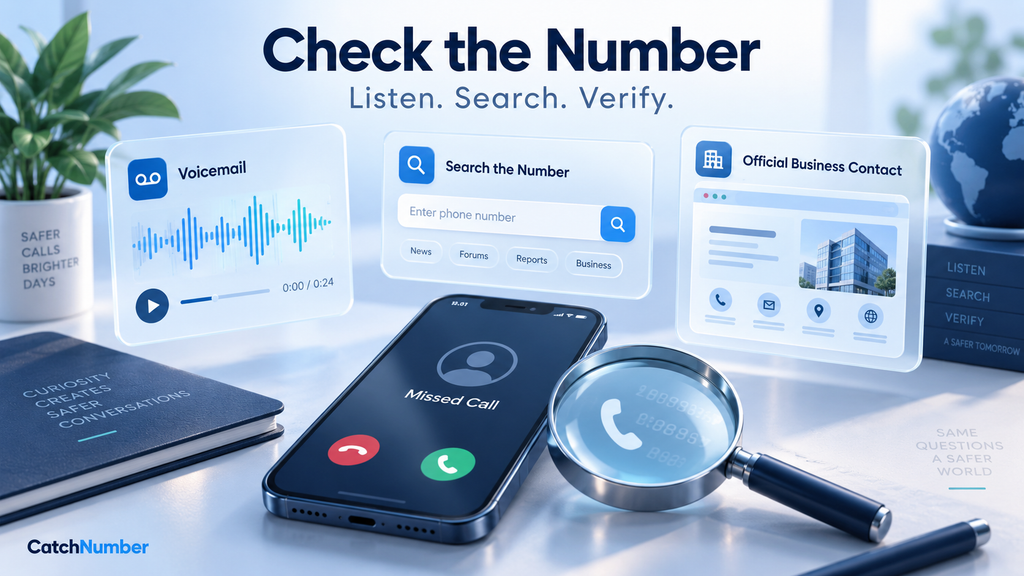
If you are wondering, “Who called me from this number?”, start with your voicemail, search the complete number, and use a reverse phone lookup to look for additional context. If the caller claims to represent a company, verify that claim through the company’s official contact details.
Here is how to work through those checks.
1. Check Whether the Caller Left a Voicemail
A voicemail can explain more than the number alone. Listen for the caller’s name, the organization they claim to represent, and a specific reason for contacting you.
Ask yourself:
- Were you expecting a call about an appointment, delivery, or application?
- Does the message explain why they need to speak with you?
- Does it ask you to contact a business you already use?
- Is the caller pressuring you to act immediately?
For example, a message about a scheduled appointment gives you something you can check independently. A vague warning about an “urgent account problem” needs more scrutiny.
A convincing voicemail is still only a claim. If someone says they are calling from your bank, open your banking app or use the number printed on your card to contact the bank directly.
2. Search the Complete Phone Number
Copy the number from your call history and search for it online. Include the country code if one is displayed.
Try searching the number in quotation marks first, then without them. Different spacing and formatting can produce different results.
Look for useful matches such as:
- A contact page on a business’s official website.
- A public business listing.
- An organization’s staff or department directory.
- Reports describing unwanted calls from the same number.
Pay attention to the source and date. An old listing may no longer reflect who uses a number, while an anonymous comment may be mistaken.
If you find nothing, that does not automatically make the caller suspicious. Many personal numbers and some business numbers
have little publicly searchable information.
3. Use a Reverse Phone Lookup for Additional Context
A reverse phone lookup starts with a phone number and searches for information associated with it. It can be a useful next step when a basic web search leaves you with unanswered questions.
You can start a reverse phone lookup with CatchNumber to check what information is available for the number you received.
When reviewing any lookup result, ask:
- Does the information fit the voicemail or reason for the call?
- Can you verify a business connection through an official website?
- Is there enough information to support a conclusion?
- Could the information refer to a previous user of the number?
Results vary by number and service. Treat a report as supporting information rather than proof of who was speaking.
Before purchasing a report, review the service’s current description of what is included. Avoid assuming that every search will identify a person or provide the same level of detail.
Look up a number
Validity, carrier, line type, and region on the first pass.
4. Understand Why Caller ID Can Be Misleading
Even if a number looks familiar, the call may not have come from that number.
Caller ID spoofing means a caller falsifies the information shown on your caller ID display. This can make a call appear to come from a local number, a business, or another trusted source. The Federal Communications Commission explains how caller ID spoofing works.
This matters when you search a missed call. A lookup may return accurate information about the displayed number without identifying the person who actually placed the call.
For example, finding a real business associated with a number does not prove that the business contacted you. If the message concerns an account, payment, or personal information, contact the organization through a channel you already trust.
A local area code is not a guarantee either. The FTC describes “neighbor spoofing”, where callers use numbers resembling yours to make the call look familiar.
5. Verify the Caller’s Story Before Responding
Once you have some context, check whether the caller’s explanation matches something real.
Suppose you receive a voicemail saying a delivery could not be completed. Before returning the call, check the retailer’s order page or the delivery company’s official tracking system.
If someone claims to be a recruiter, look for the company’s official website and confirm the opportunity through a published contact channel.
For a claimed bank or service-provider call, use the company’s official app, website, or a recent statement to find contact details.
The key is to verify the claim independently. As AT&T’s caller ID spoofing guidance recommends, contact the organization using a number from a trusted source.
Should You Call an Unknown Number Back?
There is no need to return every missed call. Base your decision on the context you can verify.
| What you find | A sensible next step |
|---|---|
| A voicemail about an appointment you recognize | Contact the provider through its published number. |
| A caller claiming an urgent bank problem | Check your banking app or call the number on your card. |
| No voicemail and no useful search results | Wait for more context before deciding whether to respond. |
| A business listing that matches an expected call | Verify the listing on the business’s official website. |
| A message requesting passwords, codes, or immediate payment | Stop and verify the request through a trusted channel. |
Not finding an answer immediately is better than relying on a weak match.
What If the Number Keeps Calling?
Repeated calls can be frustrating, especially when the caller leaves no clear explanation.
Keep a record of the number, the time of the calls, and any voicemail messages. You can then decide whether to block the number or use the call-filtering options available through your phone or carrier.
The FTC’s guide to blocking unwanted calls explains the main options. Filtering can help reduce interruptions, though you should review settings carefully if you are expecting calls from new contacts.
For unwanted calls in the United States, the FTC provides reporting guidance. Useful details include the number displayed, any callback number provided, and the date and time. If you are elsewhere, check your local consumer protection or telecommunications authority.
Frequently Asked Questions
Can I find out who called me for free?
Sometimes. A voicemail, search-engine result, or official business listing may explain the call without a paid report. Personal or unlisted numbers can be harder to identify. No search method should be assumed to identify every caller.
Does a reverse phone lookup prove who called?
No. A lookup provides information associated with the number searched. Caller ID spoofing means the actual caller may have used a different number. Always compare the result with other evidence.
Why does a phone number lookup show no results?
The service may not have information about that number, or its coverage may be limited. No result means there is insufficient information from that search; it does not establish whether the caller is safe or suspicious.
Can I search a call that says “No Caller ID”?
A standard reverse phone lookup needs a visible phone number. If the number is withheld, there is nothing to enter into the search. For persistent unwanted calls, check the assistance available from your carrier.
Is an unknown caller always a scammer?
No. Legitimate businesses, new contacts, and people who dialed the wrong number can all appear as unknown callers. Focus on what you can verify rather than assuming every unfamiliar call is fraudulent.
Check the Number Before You Call Back
An unfamiliar call does not have to become a guessing game. Review the voicemail, search the number, and compare any available information with the caller’s explanation.
Want more context about a missed call? Start your phone number lookup with CatchNumber. Use the results alongside independent checks to decide your next step.


